Explore Prashant Kishor’s complete educational background, his degree in healthcare management, and how his academic training shaped his career.
Introduction: The Academic Foundations of a Political Strategist
In modern political discourse, the public often evaluates leaders and strategists based solely on their electoral track records, campaign speeches, and media appearances. However, behind every high-stakes data model, voter outreach blueprint, and political maneuver lies a specific academic framework and intellectual grounding.
For Prashant Kishor—widely recognized across India for his groundbreaking electoral strategies and his subsequent launch of the Jan Suraaj Party—his professional journey did not begin in political backrooms. Instead, it started within the structured realms of public health, institutional management, and global development. Examining Prashant Kishor’s education offers vital insight into how a small-town student from Bihar built an analytical toolkit that eventually transformed how political campaigns are run across the country.
1. Early Schooling and Formative Years in Bihar
- Roots in Rohtas and Buxar: Prashant Kishor was born on March 20, 1977, in the Rohtas district of Bihar. Growing up in a household deeply influenced by public service—his father, Shrikant Pandey, served as a government medical professional—education was emphasized as the primary vehicle for personal and societal mobility.
- School Education: Kishor completed his foundational school education locally in Bihar, attending schools in Buxar and surrounding districts. Growing up in rural and semi-urban Bihar during the late 1980s and 1990s provided him with a direct, firsthand witness account of the state’s crumbling educational infrastructure, limited industrial avenues, and the structural stagnation that would later dominate his political agenda.
2. Higher Education: University of Lucknow
- Pursuing Management and Administration: After completing his intermediate education, Kishor moved to Uttar Pradesh for his undergraduate studies. He enrolled at the University of Lucknow, one of northern India’s prominent academic institutions.
- The BBA Degree: In 1999, he graduated with a Bachelor of Business Administration (BBA). This early exposure to business administration, organizational behavior, and structural management laid the groundwork for his analytical approach to large-scale operations long before he entered the political arena.
3. Specialization in Healthcare and Public Administration
Rather than following a conventional corporate path or entering local politics immediately after graduation, Kishor chose to specialize in a highly technical and impactful field: healthcare administration and public policy.
- Advanced Degree in Healthcare Management: Kishor pursued a Master of Healthcare Management (MHA) from the prestigious Administrative Staff College of India (ASCI) located in Hyderabad.
- Global Academic Collaboration: The healthcare management program at ASCI during that era was developed in close collaboration with premier international academic bodies, including Johns Hopkins University, USA—globally renowned for public health research and institutional governance.
- The Value of Data and Systems: This rigorous graduate training taught Kishor how to analyze massive demographic data sets, manage large-scale resource distribution, evaluate public welfare systems, and understand the macro-level indicators of human development. These exact methodologies—data mapping, demographic segmentation, and ground-level feedback loops—would later serve as the foundational architecture of his data-driven political campaigns.
4. Transition to Global Public Health and the United Nations
Following the completion of his master’s degree, Kishor applied his academic training on an international scale rather than remaining confined to domestic corporate settings.
- International Public Health Work: He spent nearly a decade working globally in public health policy, program evaluation, and institutional development.
- Stint with UNICEF: Among his most notable international assignments was his tenure with the United Nations Children’s Fund (UNICEF). Working with international agencies took him to various developing regions, including a posting in Chad (Central Africa), where he focused heavily on social policy planning, health-sector interventions, and grassroots developmental challenges.
- Shaping a Macro-Perspective: Working within multilateral organizations exposed Kishor to governance challenges across different continents, teaching him how systemic policy failures impact marginalized populations. This international exposure sharply contrasted with the regional politics of his home state, planting the early seeds for his future critique of governance models in Bihar.
5. From Global Health to National Political Strategy
The bridge between public health administration and political strategy may seem wide, but at its core, both fields rely heavily on the same variables: demographic data, behavioral patterns, resource allocation, and targeted communication.
- The Pivot to Strategy: Recognizing that structural changes in developing regions require political will and administrative reform at the highest levels, Kishor transitioned from international public health consulting to political analysis.
- Building IPAC and Consulting Giants: He founded and led political consultancy frameworks (such as Citizens for Accountable Governance and later I-PAC), managing complex electoral campaigns across India for various national and regional parties.
- Returning to the Source: After years of advising leaders, Kishor realized that professional consulting could only optimize political outcomes temporarily; fixing Bihar’s long-term decline required direct political accountability. This realization led directly to his massive statewide padyatra and the creation of the Jan Suraaj Party, bringing his journey full circle back to the state where his education began.
Frequently Asked Questions (FAQs) for SEO
Q: Where did Prashant Kishor complete his graduation?
A: Prashant Kishor completed his Bachelor of Business Administration (BBA) from the University of Lucknow in 1999.
Q: What is Prashant Kishor’s higher education qualification?
A: He holds a Master of Healthcare Management (MHA) from the Administrative Staff College of India (ASCI), Hyderabad, in a program associated with Johns Hopkins University.
Q: Did Prashant Kishor work with the United Nations?
A: Yes, before entering political strategy, he worked in international public health, including a notable tenure with UNICEF managing social policy programs in Chad.
-
Prashant Kishor Education Qualifications: From Lucknow University to the United Nations
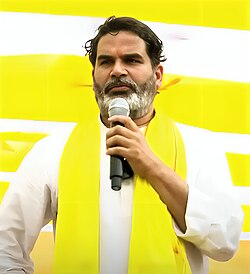
Explore Prashant Kishor’s complete educational background, his degree in healthcare management, and how his academic training shaped his career. Introduction: The Academic Foundations of a Political Strategist In modern political discourse, the public often evaluates leaders and strategists based solely on their electoral track records, campaign speeches, and media appearances. However, behind every high-stakes data…